As someone who’s spent countless hours behind the wheel and has seen the slow breakdown of driver’s seats on many different cars, I can tell you that understanding what causes a car driver’s seat to break down is extremely important for any car owner. Your driver’s seat is not just a place you sit – it’s your main connection to your vehicle, and it can impact your safety, comfort, and overall driving experience. When this important part of your car’s interior begins to break down, it can turn even short trips into awful experiences.
After looking at thousands of car interiors over my career, I’ve noticed that when a seat breaks down, it’s almost never a sudden occurrence. Instead, it’s usually a slow process involving several different factors that all work together to compromise the integrity of your seat. Whether you’re experiencing sagging cushions, torn upholstery, or faulty adjustment mechanisms, understanding what causes a car driver’s seat to break down can help you avoid premature deterioration and ensure your seat has a long life.
1. The Main Culprits of Car Seat Driver’s Seat Failure
1.1 Car Seat Material Fatigue: The Silent Destroyer
The most basic of all reasons what causes a car driver’s seat to break down is material fatigue due to repetitive use. Every time you get in and out of your vehicle, your seat takes a lot of abuse. The constant compression and release cycles gradually weaken all of the components, from the foam padding to the support springs.
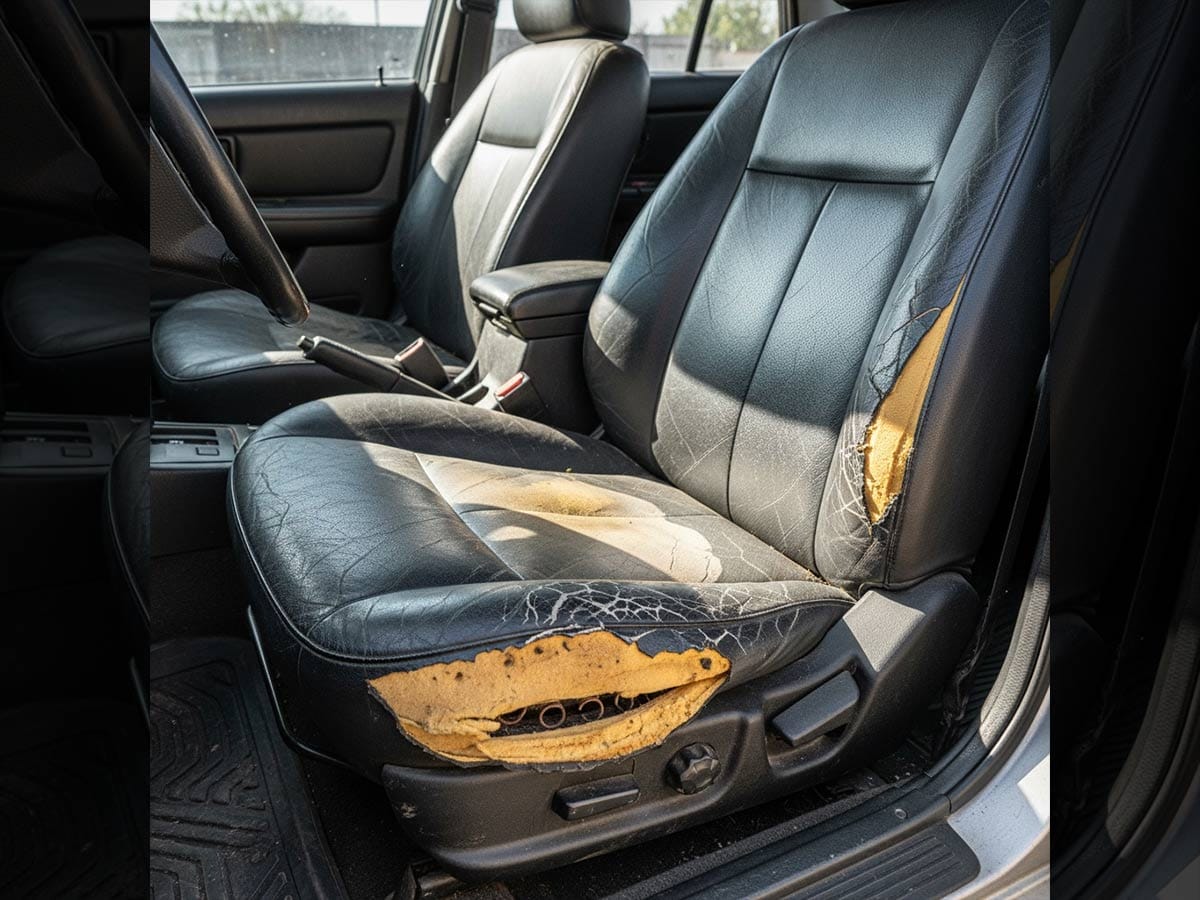
The upholstery undergoes a microscopic amount of damage with each entry and exit, especially along the seat bolsters, where you find the most friction. This repetitive abrasion eventually shows up as visible wear and tear, fraying, and tearing on fabric/leather surfaces. I’ve observed this trend in different car interiors, no matter what the date of manufacture of the car was.
Foam compression is the other important characteristic of material fatigue. The padding under you loses its ability to regain its original shape after repeated compressing, which is known as compression set.
This degradation is not only a problem for the comfort aspect, but can affect the structural support your car seat provides during daily driving, and potential car accidents and car crashes.
1.2 Environmental Attack on Your Precious Cargo
Your car seat is constantly exposed to challenging environmental conditions that help increase deterioration. Ultraviolet radiation is one of the most damaging elements and especially dangerous to the ones that are often parked outside of the vehicle. Prolonged exposure to the sun’s UV rays creates chemical reactions in the materials of a seat, causing embrittlement, discoloration, and weakening of both upholstery and foam materials.
Heat compounds these effects to a great extent. The shell of the car seat and components inside the seat expand and contract as temperature changes, resulting in stress fractures and separation of materials. I’ve noticed that cars that are in the elements on a frequent basis show signs of aging much faster than cars that are garaged, regardless of the equivalent of their car seat expiration date in automotive terms.
Humidity is another problem, especially for foam components, which can be prone to moisture retention and become compressed. The combination of heat and humidity is the perfect environment for adhesive failure, and upholstery begins to separate from the underlying support structures.
1.3 Weight, Stress, and Structural Overload on Your Car Driver’s Seat
Modern vehicles have to be able to adapt to different body types, but going over recommended weight limits increases the rate of car seat breakdown tremendously. The average costs of repairs are significantly increased due to structural component failure because of overloading. Weight stress impacts more than one seat system at a time:
- Fabric and leather develop stress points, which become permanent indentations
- Cushioning compresses past its recovery level
- Frame components suffer from metal fatigue and possible failure
- Overload adjustment mechanisms wear out prematurely
1.4 Seam Failure: The Weak Links
Seams represent critical stress concentration points in any car seat based design. These stitched joints experience concentrated forces from occupant weight, dynamic motion associated with driving, and repetitive entry and exit cycles. When the stress on the seams is greater than the tensile strength of the thread itself, it causes fraying, loosening, and eventual tearing of the upholstery.
And seam location can have a big impact on its longevity. The highest stress levels are detected at bolsters, seat cushions, and backrests, where there is direct contact and friction with occupants. Environmental conditions such as UV exposure may compromise thread materials, causing premature seam deterioration and adding to premature failure of the car seat.
2. Mechanical and Structural Car Seat Failures
2.1 Car Driver’s Seat Frame Corrosion: The Hidden Threat
Frame corrosion is a serious problem that is less obvious than surface damage, but it can cause serious damage to the structural strength of the seat. Most automotive seats make use of steel or metal alloy frames that offer much-needed structural support. When subjected to moisture, road salt, and other corrosive agents, these frames oxidize, resulting in rust.
Corrosion reduces the metal’s resistance to the stresses of normal use and may ultimately result in complete failure of the frame. This type of damage is often done in out-of-sight places underneath upholstery, so it’s not easy to spot early. Improper automobile maintenance (especially in areas with harsh winters and road salt applications) speeds this corrosion process.
2.2 Failure of the Car Seat’s Adjustment Mechanism
Power- and manual-adjusting car seat drive mechanisms are complicated mechanical assemblies and subject to a variety of failure modes. Power seat electrical components can be broken from moisture intrusion, worn switches, or motor burnout. Common symptoms include:
- Seats are slowing down abnormally slow or not at all
- Periodic operation with a need for repeated efforts.
- Full system failure, which requires professional diagnosis
Manual adjustment mechanisms are prone to various problems, such as misalignment of gears, stretching of cables, and obstruction in the track. The most common reason for adjustment failure is the objects getting stuck in the seat tracks.
3. Seat Safety and Child Car Seat Considerations
When talking about what causes a car driver’s seat to break down, we have to think about seat safety implications. Weak driver’s seat – This can influence your ability to keep good driving posture, which can influence your reaction times and control during emergency situations.
The National Highway Traffic Safety Administration stresses that seating position is important for proper airbag deployment and protection of vehicle occupants.
For families with children, seat breakdown can affect the installation and effectiveness of a child’s car seat. Car seat manufacturers design their products assuming that the vehicle seat condition is proper. A deteriorated or unstable driver’s seat may affect the installation angle or stability of rear-facing or convertible car seat systems installed in adjoining positions.
The National Highway Traffic Safety Administration continues to revise seat safety standards for vehicle seats, as it understands the important role that proper seating plays in crash protection. When your driver’s seat fails, it potentially impacts your vehicle’s entire safety system, including precious cargo protection capabilities.
4. Frequently Asked Questions (FAQs)
4.1 How Much Does It Cost to Fix a Car Driver’s Seat?
Repair costs vary greatly depending on the extent of damage and the type of vehicle. Simple upholstery repairs can begin as low as $125, and full reupholstering can cost close to $350 for a single seat. Full vehicle reupholstering averages $2500, with leather treatments usually more expensive than their fabric counterparts. Average costs increase significantly when structural repairs are needed.
4.2 How Does a Car Seat Go Bad?
Car seats degrade by several different processes happening simultaneously. Material fatigue is the weakening of upholstery and foam with repeated use cycles. The chemical deterioration of seat components is accelerated by environmental influences such as UV radiation, heat, and moisture. Weight stress and improper use can lead to structural failures, while wear and tear due to daily use will gradually destroy all seat systems.
4.3 What Causes a Seat to Not Move?
Seat movement failures are usually caused by some form of mechanical obstruction, electrical issues, or worn components. Objects stuck in the seat tracks, blown fuses, motor failure, or stretching of cables can prevent proper operation. Manual seats may have gear misalignment or locking pin disengagement, while power seats, due to the malfunction of switches, motor burnout, etc.
4.4 How Long Do Car Seats Last?
Automotive seats don’t have standardized expiration dates like infant car seats or convertible car seats, but the lifespan of your auto seat depends on usage patterns, environmental conditions, and the quality of your maintenance. Well-maintained seats in moderate climates may last the life of the vehicle, while high-use or badly maintained seats may need attention in 5-10 years, unlike an expired car seat, which must be replaced.
4.5 What Car Seat Brand Is the Safest?
While this question is generally relevant to child’s car seat products, rather than vehicle seats, recent testing by organizations such as ADAC has seen brands such as Cybex, Nuna, and Maxi-Cosi consistently perform well in safety evaluations. The National Highway Traffic Safety Administration has detailed ratings for child restraint systems to assist parents in decision-making.
4.6 How Do You Know If Your Car Seat Is Damaged?
Some signs of wear and tear include droopy upholstery, torn seams, compressed foam that does not spring back, and adjustment mechanisms that do not work properly. Listen for unusual noises when the seat is operating, observe if there is excessive movement when putting the seat through its stability, and check for frame damage or corrosion in accessible areas.
4.7 What Causes Car Seats to Rip?
Seat ripping is caused by a number of factors: seam stress above thread strength, material fatigue of repeated use, sharp objects or rough clothing cuts, and environmental degradation weakening upholstery materials. Materials can be made brittle and prone to tearing by UV exposure and heat, while improper cleaning products can chemically damage the surfaces of the seats.
4.8 What Are the Most Common Car Seat Mistakes?
The most common mistakes are installing too much movement, not performing regular maintenance and cleaning, using harsh chemicals that can harm materials, not noticing early signs of wear and tear, and trying to DIY the fix without using the proper materials or methods. In addition, going over weight limits and not protecting seats from becoming damaged by their environment are common mistakes.
5. Methods of Car Seat Breakdown Prevention and Maintenance
Understanding what causes a car driver’s seat to break down helps to anticipate preventive action. Regular cleaning and conditioning help to keep the materials in good condition, while protective measures such as seat covers and window tinting can help to minimize damage to the environment. Prompt attention to minor problems prevents them from escalating into major problems needing expensive repairs.
Developing a schedule for routine maintenance, including periodic inspection of adjustment mechanisms and structural components to check for problems before they become seat safety hazards. Professional assessment on a semiannual basis, especially on high-mileage vehicles, is a good way to get expert evaluation of the condition of the seat and recommendations for preventative care.
Your driver’s seat is an investment worth thousands of dollars in comfort and seat safety. By having a working knowledge of the different factors that contribute to seat breakdown, from material fatigue and environmental assault to mechanical failures and improper use of the seat, you can take proactive steps to preserve this critical component. Whether you are dealing with a luxury vehicle or basic transportation, proper car seat maintenance will help to protect your investment and your day-to-day driving experience.
Remember that what causes a car driver’s seat to break down is usually preventable by proper care, regular maintenance, and quick attention to developing problems. When issues do arise, professional evaluation can help you determine whether repair or replacement is the most cost-effective solution, so that you will always be safe and comfortable on the road.