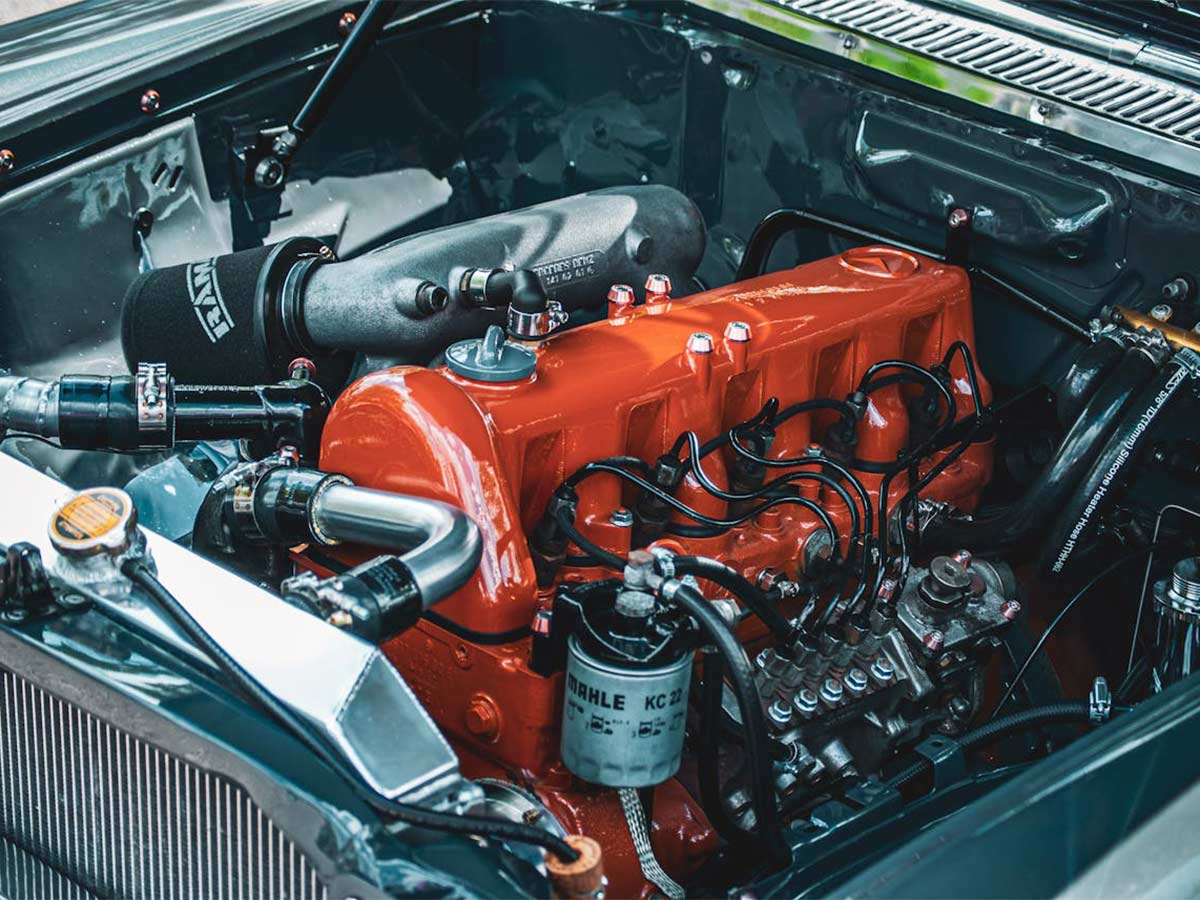
My neighbor has a Honda Civic with the hood up, and it was last weekend, and I’m standing in my garage scratching my head. He’d asked me to help figure out why his engine was misfiring, and to be honest, I didn’t really know where to begin. Then it occurred to me, when was the last time he looked at his spark plugs? I get onto a rabbit hole after a simple question, where I ponder: how many spark plugs does a car have anyway?
If you have ever wondered this yourself, you have come to the right place. Whether you are a complete newbie looking to understand your car better or you’ve heard conflicting information on the various spark plug counts, I’m going to explain it all to you. By the time you’re done reading this article, you’ll have a good idea of how many spark plugs your car requires and why it’s more important than you realize.
1. The Golden Rule: One Spark Plug Per Cylinder
The basic answer to how many spark plugs does a car have is that, on most cars, one spark plug per cylinder is used for each cylinder in your engine. This simple rule includes approximately 95% of the cars on the road today, and it is easy to determine your vehicle requirements.
1.1 How Many Spark Plugs Does a 4 Cylinder Car Have?
When we are asked how many spark plugs does a 4 cylinder car have, the answer is easy – four spark plugs! In contrast, 4 cylinder engines are very popular as they offer the ideal balance between fuel consumption and performance. You’ll find them in:
- Most economy cars, such as the Toyota Corolla and Honda Civic
- Many sedans and crossovers
- Economical commuter vehicles
I’ve worked on countless 4 cylinder engines over the years, and they’re actually some of the most reliable powertrains out there. Four spark plugs coordinate together to ensure that each cylinder fires in sequence, producing smooth torque.
1.1.1 Does 4 Spark Plugs Mean 4 Cylinders?
Yes, in most cases, if your car has 4 spark plugs in it, it has a 4-cylinder engine. This direct correlation makes it easy to determine what engine you have.
1.2 How Many Spark Plugs Does a 6 Cylinder Car Have?
How many spark plugs does a 6 cylinder car have? You guessed it – 6 spark plugs. These V6 engines are common in:
- Mid-size SUV models, such as the Ford Explorer
- Luxury sedans
- Performance-oriented vehicles that require more power than the 4-cylinder can provide
The V6 configuration stacks 6 cylinders in two banks of 3 cylinders, each of which requires its own spark plug to spark the fuel-air mixture.
1.3 V8 and V12 Engines: High-Performance Territory
How many spark plugs are in a V8 engine? Eight spark plugs, following our one per cylinder rule. V8 engines are found in:
- Trucks and large SUVs
- Performance cars and sports cars
- Luxury vehicles where the power isn’t an issue
For the ultimate in luxury, how many spark plugs in a V12? A whopping 12 spark plugs. Such engines are reserved for high-end luxury cars such as Mercedes S-Class and BMW 7 Series vehicles.
2. Different Types of Vehicles and Their Spark Plug Needs
2.1 How Many Spark Plugs Does a Smart Car Have?
One question that I get asked surprisingly often is how many spark plugs does a smart car have. The answer depends on which model year you’re referring to, but it’s pretty interesting:
- Smart ForTwo 450 (older model) 6 spark plugs for the 698cc engine
- Smart ForTwo 451 (2007-2014) 3 Spark Plugs for the 3 Cylinder Engine
- Smart ForTwo 453 2015+ 3 spark plugs for the 900cc turbo engine
I remember the first time I saw the engine bay of a Smart car – I was shocked as to how compact it all was, yet it still required proper maintenance of your spark plugs, just like any other car.
2.2 How Many Spark Plugs Are On a Normal Car?
How many spark plugs are on a normal car? For the majority of standard vehicles, you’re going to have between 3-6 spark plugs. Here’s the typical breakdown:
- Small economy cars: 3 or 4 spark plugs (3-cylinder or 4-cylinder engine)
- Mid-size vehicles: 4-6 spark plugs (4 cylinder or V6 engines)
- Trucks and SUVs: 6-8 spark plugs (V6 or V8 engine)
- Luxury and performance cars: 8-12+ spark plugs (V8, V10 or V12 engines)
3. Why Some Cars Have More Spark Plugs Than Cylinders?
This is where things get interesting. Some engines do break our fundamental rule and use so-called dual ignition or twin spark systems.
3.1 Twin Spark Engines: Double the Ignition
Some high-performance and efficiency driving engines employ two spark plugs per cylinder. This means:
- A 4-cylinder twin spark engine has 8 spark plugs.
- A 6-cylinder twin spark engine has 12 spark plugs.
- Amazingly, a V12 twin spark engine is equipped with 24 spark plugs.
I have worked on Mercedes-Benz V12 engines that use this twin spark technology. Believe me, replacing 24 spark plugs is a major task! But the benefits include:
- More complete fuel burning
- Better fuel economy
- Reduced emissions
- Increased reliability of the ignition, even in difficult situations.
Examples of vehicles that use twin spark systems include:
- Some Mercedes 112 and 113 engines
- Alfa Romeo Twin Spark engine
- Honda i-DSI engines
- Chrysler Hemi engines
3.2 The Benefits of Dual Ignition Systems
Twin flame fronts (generated from dual spark plugs) consume the fuel charge faster and more completely. This is particularly helpful for:
- High-powered engines that require peak power
- Engines that provide the best fuel consumption.
- Critical aircraft engines
4. Engines That Have No Spark Plugs At All
Some people think that every car engine needs spark plugs, but that is not so.
4.1 How Many Spark Plugs Does a Diesel Have?
How many spark plugs are on a diesel? The answer is zero. Diesel engines are compression ignition rather than spark ignition engines, meaning they don’t require spark plugs at all.
Instead, diesel engines use glow plugs, which are heating elements that heat the air in the combustion chamber on cold starts. These aren’t in use all the time like spark plugs – they’re used primarily to help the engine start up.
4.2 Electric, Hybrid, and Rotary Engines
Pure electric vehicles have no internal combustion engine, so they don’t need any spark plugs. Hybrid vehicles are more complicated:
- Traditional hybrids: Still have a gasoline engine, therefore follow normal spark plug rules.
- Plug-in hybrids: Same as traditional hybrids when the gas engine is running
- Range-extender hybrids: May have a small engine with fewer cylinders than expected
Rotary engines, such as the ones used in some Mazda vehicles, do use spark plugs, but in a different configuration than that of traditional piston engines. They generally use more than one spark plug per combustion chamber for the best ignition.
5. Trouble Signs With Your Spark Plugs
Since we’re talking about how many spark plugs does car have, it’s worth understanding when they need to be replaced. Here are the warning signs that I always tell people to look out for:
5.1 What Are Signs of Bad Spark Plugs?
From my experience, these are the best signs to look for:
- Engine misfires – Stuttering or jerking when accelerating
- Rough idle: Abnormal vibrations when the car is sitting still
- Hard starting: Difficulty starting the engine over
- Check engine light: Sometimes, the first warning you’ll see
- Poor fuel economy: The incomplete combustion wastes fuel
- Lack of acceleration: Sluggish reaction when you step on the gas pedal
I can recall helping a friend whose car was having a rough idle. We pulled the spark plugs and found they were totally fouled with carbon buildup – we replaced all 4 of them and now his car runs like new.
6. Can You Drive With Bad or Missing Spark Plugs?
6.1 Can You Drive With 3 Out of 4 Spark Plugs?
Technically, you can drive a short distance with a bad spark plug, but I would strongly suggest against it. Here’s what happens:
- Reduced power: Your engine loses 25% of its cylinders
- Fuel inefficiency – Unburned fuel leads to increased consumption
- Catalytic converter damage: Raw fuel can cause damage to this expensive part
- Engine vibration: The unbalance results in rough running
I once had a customer drive 50 miles with a dead spark plug – it cost them a new cat that was 10X the price of replacing the spark plug.
7. Spark Plug Replacement Cost and Considerations
7.1 How Much Do Spark Plugs Cost?
Spark plug prices really differ a lot depending on the type:
- Standard copper plugs: $2-$10 each
- Platinum plugs: $10-$20 each
- Iridium plugs: $20-$40 each
Labor costs are usually $40 – $350, depending on the complexity of the engine. V6 and V8 engines are more expensive because of the difficulty in accessing them.
7.2 Professional vs. DIY Spark Plug Replacement
While how many spark plugs does a car engine have determines how much the parts cost, labor can vary dramatically. Some engines have access to the spark plugs that are incredibly difficult to access, involving the removal of the intake manifold or different types of complex procedures.
7.3 Maintenance Schedules: When to Change Spark Plugs
Modern spark plugs have a much-improved life compared to designs of the past:
- Standard plugs: 30,000-40,000 miles
- Platinum plugs: 60,000-100,000 miles
- Iridium plugs: 80,000-120,000 miles
I always recommend that you follow your manufacturer’s schedule, but heavy-duty use (towing, stop-and-go traffic) may require more frequent replacement.
8. How To Know How Many Spark Plugs Are In Your Car
If you’re still wondering how many spark plugs does my car have, here are the easiest ways to find out:
- Count the Cylinders Look for “V6” or “4-cylinder” or similar markings on your engine
- Check your owner’s manual – your owner’s manual will tell you exactly how many spark plugs your car needs
- Count the ignition coils: Modern cars normally have one coil per spark plug
- Ask your mechanic: Any good mechanic can tell you right away
8.1 Special Applications: F1 and Modified Engines
How many spark plugs are in an F1 car? Current F1 cars are powered by V6 engines with 6 spark plugs, but these engines are very specialized surface-gap designs that are capable of extreme conditions.
The modified or high-performance engines may have a different standard spark plug count due to:
- Aftermarket twin spark conversions
- Racing-specific ignition systems
- Custom engine builds
9. The Bottom Line: Why Spark Plug Count Matters
Understanding how many spark plugs does a car have isn’t just trivia for car enthusiasts – it’s important and practical knowledge that helps you:
- Budget for the maintenance cost accurately
- Understand the complexity of your engine
- Communicate successfully with mechanics
- Spot potential issues early
From my years of working on cars, I’ve seen far too many people get caught off guard when it comes to maintenance costs because they didn’t realize what their engine needed. A V8 truck owner with 4-cylinder maintenance cost expectations is in for sticker shock.
10. Conclusion
So, how many spark plugs are on a car? For most vehicles, it’s just one plug per cylinder – 4 plugs for a 4-cylinder, 6 for a V6, 8 for a V8, etc. However, some high-performance engines feature dual ignition systems that triple this amount, and diesel and electric vehicles do not use spark plugs at all.
The bottom line is that understanding your engine type not only helps you figure out how many spark plugs does a petrol car have, but also gives you an idea of what to expect when it comes to maintenance costs and schedules. Whether you drive a compact 3-cylinder commuter or a luxury V12, it’s critical to ensure the spark plugs in your engine are maintained correctly for optimal performance, fuel economy, and engine longevity.
So the next time someone asks you how many spark plugs does a car have, you will be able to give them a detailed answer that goes way beyond the numbers. And more importantly, you’ll know why it’s important to keep your car running smoothly for years to come.
As always, consult your owner’s manual or consult with a qualified mechanic. Every engine is different, though, and proper maintenance is always worth the investment to your vehicle’s long-term health and your safety on the road.